 I need to find some way to slow down or extend the reading experience of enjoyable novels. The problem is the more enjoyable the story, the faster I tear through it. I'm only fifty odd pages from the end of Gunshot Road by Adrian Hyland. I need to know what happens, but I don't want to finish the book. The dreaded reader's paradox - how to devour and savour at the same time. Now if the next book in the series was already out, I'd have a (temporary) solution. I suspect the only solution will be to pick up the next book on the TBR pile and hope for the same reading pleasure. That or someone needs to share with me their top tips for altering the space-time physics of reading. Any takers?
Thursday, October 7, 2010
Altering the space-time physics of reading
I need to find some way to slow down or extend the reading experience of enjoyable novels. The problem is the more enjoyable the story, the faster I tear through it. I'm only fifty odd pages from the end of Gunshot Road by Adrian Hyland. I need to know what happens, but I don't want to finish the book. The dreaded reader's paradox - how to devour and savour at the same time. Now if the next book in the series was already out, I'd have a (temporary) solution. I suspect the only solution will be to pick up the next book on the TBR pile and hope for the same reading pleasure. That or someone needs to share with me their top tips for altering the space-time physics of reading. Any takers?

Wednesday, October 6, 2010
Review of The Coroner’s Lunch by Colin Cotterill (Quercus, 2004)
 Dr Siri Paiboun has spent most of his life fighting for the communist cause in Laos. Having gained power he feels it’s time for him to retire and let the next generation get on with running the country. Instead, he’s been appointed as the state coroner at the age of seventy two. Dealing with dead bodies is not the same as looking after healthy ones and he finds he’s has to learn a whole new skill set from an ancient French textbook in an environment lacking in facilities and equipment. Thankfully the post comes with Mr Geung, the mortuary assistant, and Nurse Dtui, who at least have an institutional knowledge. Rather than simply diagnose the cause of death, Siri feels drawn to investigate the reason, especially when it’s made abundantly clear he should forget such ideas. And when the wife of a party leader arrives on his slab and he suspects foul play he inevitably can’t help but put his nose in where it’s not wanted. Soon after, he is dealing with three Vietnamese soldiers and an international crisis is impending and he has unwittingly put himself in the firing line.
It’s quite difficult to pigeonhole The Coroner’s Lunch, other than to say it’s a crime novel set in Laos in 1976. It’s too political to be a cozy, though it does have leanings that way; it has too much humour and comic charm for a noir or hardboiled; and it’s more a cultural commentary than a police procedural. It’s also very good. Cotterill’s skill is manifold: the story being well paced and plotted, with a good balance between show and tell, giving enough but not too much back story, and it being peopled by a wonderfully depicted set of characters. Indeed, Dr Siri, Nurse Dtui and Mr Geung are all interesting folk that one is delighted to spend time with, and the supporting cast feel like ‘real’ people rather than stock characters. There was, however, one thing that jarred a little, and it’s taken a couple of days reflection to put my finger on it. The story has a dark side and should have had a lot of tension, and yet somehow it didn’t. I think the comic charm and the warmth of Siri’s personality seemed to dissipate any sense that he was in any real danger. In this sense, the story for all its twists and turns, lacked an edge. Overall, a thoroughly enjoyable read and recommended.

Tuesday, October 5, 2010
The bust from the air
Google released Streetview Ireland this week. One of the side effects is that they have captured the full extent of the housing bust as their cars drove round every road in the country (see here). Having looked at the startling Google Earth images at this blog of the housing bust in the US, I thought I'd capture a few of estates in Ireland. Here are eight of them.


Monday, October 4, 2010
September reviews
 A fairly eclectic month of reading. No one book really stood out as stellar, but it was fun to re-read Terry Pratchett's Guards! Guards!
Love, Sex and War by John Cosgrove ****.5
Smoked by Patrick Quinlan ***.5
The Green Ripper by John D. Macdonald ***.5
The Arms Maker of Berlin by Dan Fesperman ***
Saturday's Child by Ray Banks****
Bangkok Tattoo by John Burdett ***
The Case of the Missing Books by Ian Samson ***
The Thin Man by Dashiell Hammett ****
Tomato Red by Daniel Woodrell ****
Guards! Guards! by Terry Pratchett****.5
Sunday, October 3, 2010
Lazy Sunday Service
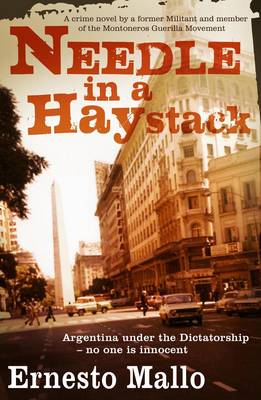 I finally got my hands on a copy of Adrian Hyland's Gunshot Road yesterday. At last! No surprise that it moves straight to the top of the TBR.
Presently reading Ernesto Mallo's Needle in a Haystack. It has some very nice passages and observations, for example:
"Our other half is our great witness, the keeper of our imagination, the one who confirms that our world is real, concrete, palpable. Our other half is the key piece of our universe. You ask: did you see that? Did you hear that? What do you think about that? Our other half provides us with the only proof we ever get that what we sense is real."
My posts this week:
Review of Love, Sex and War by John Cosgrove
Unfolding space
Trading and investing in a smart economy
This seems familiar
Ireland's Black Thursday, but are there any more black days to come
Changes in NAMA rules for AIB and BoI
Ireland's external debt
Production in Building and Construction Index
Review of South of no North by Charles Bukowski
A black old week
Saturday, October 2, 2010
A black old week
 It's been a terrible week in Ireland on the economic front. We all knew the bank bailout was going to be a disaster, but we didn't know how much of one. The government finally revealed what it thinks is the final estimate for the cost: €45 billion ($62bn or £39bn) (with possibly €5bn more if the property market doesn't recover sufficiently over the next 10 years). That does not include the €40bn the National Assets Management Agency is spending buying property loans off of the banks. I've been posting about it on the other blog I contribute to, with an overview piece here.
The cost of one bank alone - Anglo Irish - will be a minimum of €29.3bn (and possibly €34bn), which the governor of the Central Bank has said we'll never see again. That's a big number and it's difficult to get into perspective. One way is to compare it to the country's tax intake of €33bn. Basically, we're going to spend an entire year's worth of tax bailing out one bank and not receive anything in return. And it's worse because we have to pay interest of €1.7 bn per annum on the money we've borrowed to bail out the bank. Another way is to standardise by the size of the economy. This quote from Bloomberg about Anglo Irish jumped out at me yesterday and put me in a cold sweat:
"Measured against the size of the economy, that’s comparable to a $3 trillion bailout for a single U.S. bank." $3 trillion!
Would U.S. tax payers have sanctioned a $3 trillion bailout of one bank? Would any other country have accepted this as meekly as we have?
€29.3bn for one bank sounds like a massive amount. Put in the context of both the country's tax intake and relative to the size of the economy and you realise how mindboggling and frigthening the bail out is.
A week we'll be paying for in a couple of generations time. God help us ...
Friday, October 1, 2010
Review of South of No North by Charles Bukowski (Black Sparrow Press, 1972)
 A colleague lent me a copy of this collection of 27 short stories packed into 189 pages as an example of how to write in the short form. His view is that my short stories have too much dialogue and not enough prose, and in his opinion, Bukowski manages to be dialogue heavy whilst also having weighty, meaty prose that give substance to the stories. And on my reading, it’s difficult to disagree with him. Bukowski’s prose is indeed rich, whilst still maintaining a show rather than tell style, and there is much to admire in the writing. His short stories are often only a thousand words or so, but are vivid and engaging, and it’s clear why Time magazine labelled him the ‘laureate of American low life’. And even though the stories in South of No North clearly relate to his own life, especially those focused on Henry Chinaski (his childhood acne, his chronic alcoholism, his endless succession of jobs, his movement between cheap rooming houses, his womanising, his experience of writing, his marriage to a Texan poet despite having never met, his time in hospital), they are also, it has to be said, quite troubling. Through his writing he comes across as a full-blown misogynist, with women acting purely as sexual objects. There are three ways to a woman’s heart in Bukowski’s writing – ply them with drink (preferably a fifth of whiskey), just walk right up to them and kiss them, or rape them. In all three cases they will instantly fall in love with you, dump (or kill) their present boyfriend, and leap in bed with you until they realise that you are the bastard that they always knew you were. Queue big argument, storm out, five minutes of feeling sorry for one’s self, and then stealing the next woman to come along. That said, there is much to envy in Bukowski’s writing prowess and prose. So, yes, his writing style and craft is something to work towards, and his noir sensibilities, but not, I feel, some of the stories and their worldview.
Subscribe to:
Posts (Atom)
